Our Farm is a place for acclimatization and experimentation.
The primary objectives are to select plant varieties that will be able to reproduce independently and survive the local seasonal conditions, which are very wet in winter with summers that vary between rain and drought.
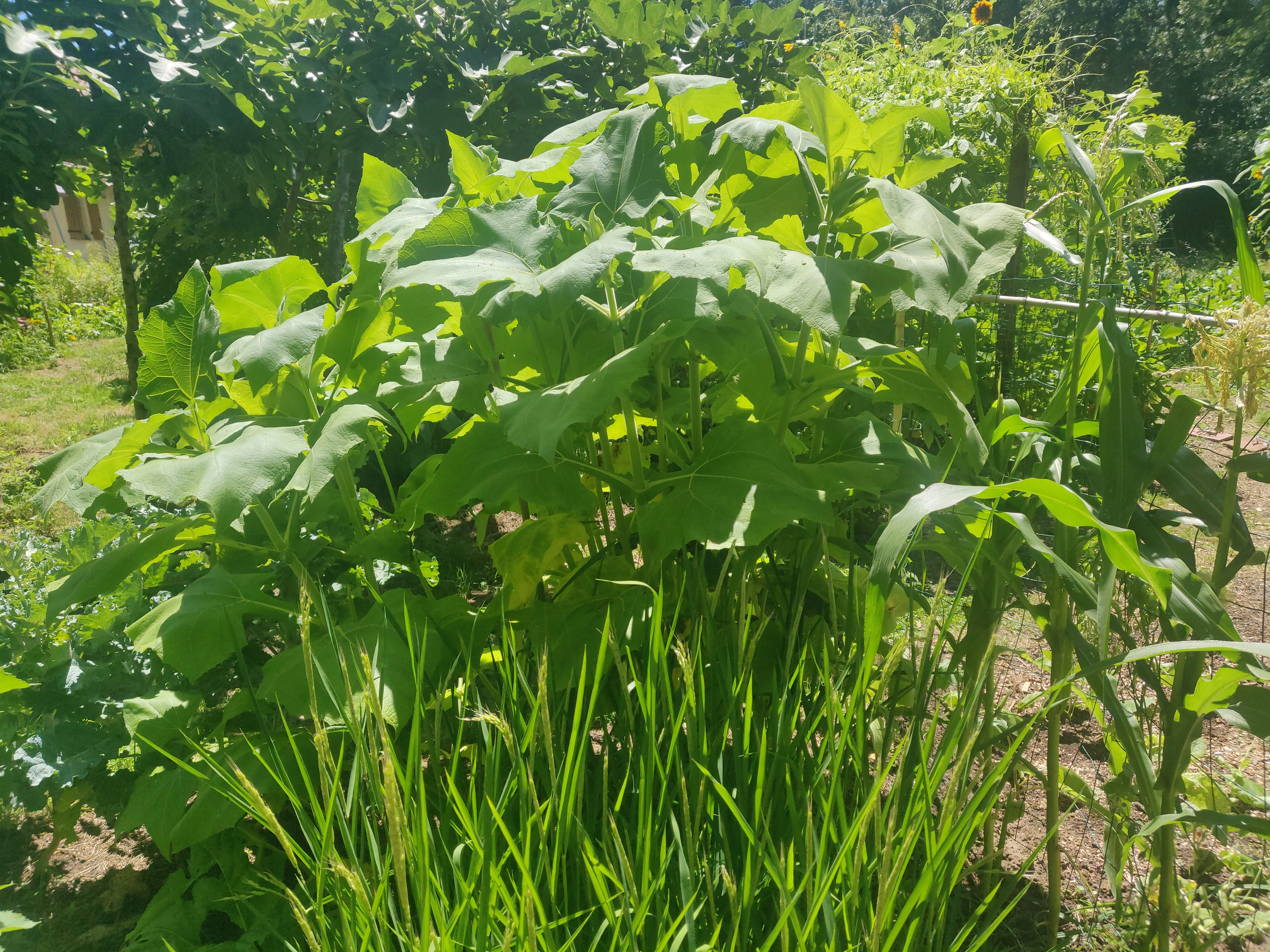
Harvesting seeds, which requires allowing plants to complete their full life cycle, allows for increased adaptability and resistance from generation to generation.
Companion cropping between wild and domesticated plants to promote their interactions and preserve local species. Intervention is limited to surface weeding as needed, but without tilling the soil.
A gradual improvement of the soil through living plant cover or, failing that, through numerous natural mulches produced on-site, rich in carbon and nitrogen.
Agricultural and cultural practices have evolved since the dawn of time, but choosing how to implement them using rudimentary tools allows us to become aware of the fundamentals present in permaculture, electroculture, market gardening on living soil, etc.
The biodiversity garden approach, which is primarily oriented towards living organisms, does not neglect aesthetics and productivity made possible by the balance between all the beings present in this mini-ecosystem sustained by practically nothing other than itself.
This includes the “ground crew” of the farmyard animals, who have access to designated, rotating plots for surface scratching and, above all, a continuous supply of nutrients to the garden. The presence of a multitude of bird and insect species shows that a balance can be achieved and that everyone can have their place.
We generally favor a no-treatment approach, without ruling out testing natural methods. However, we choose not to use any products from the chemical industry in order to preserve the soil and its inhabitants.
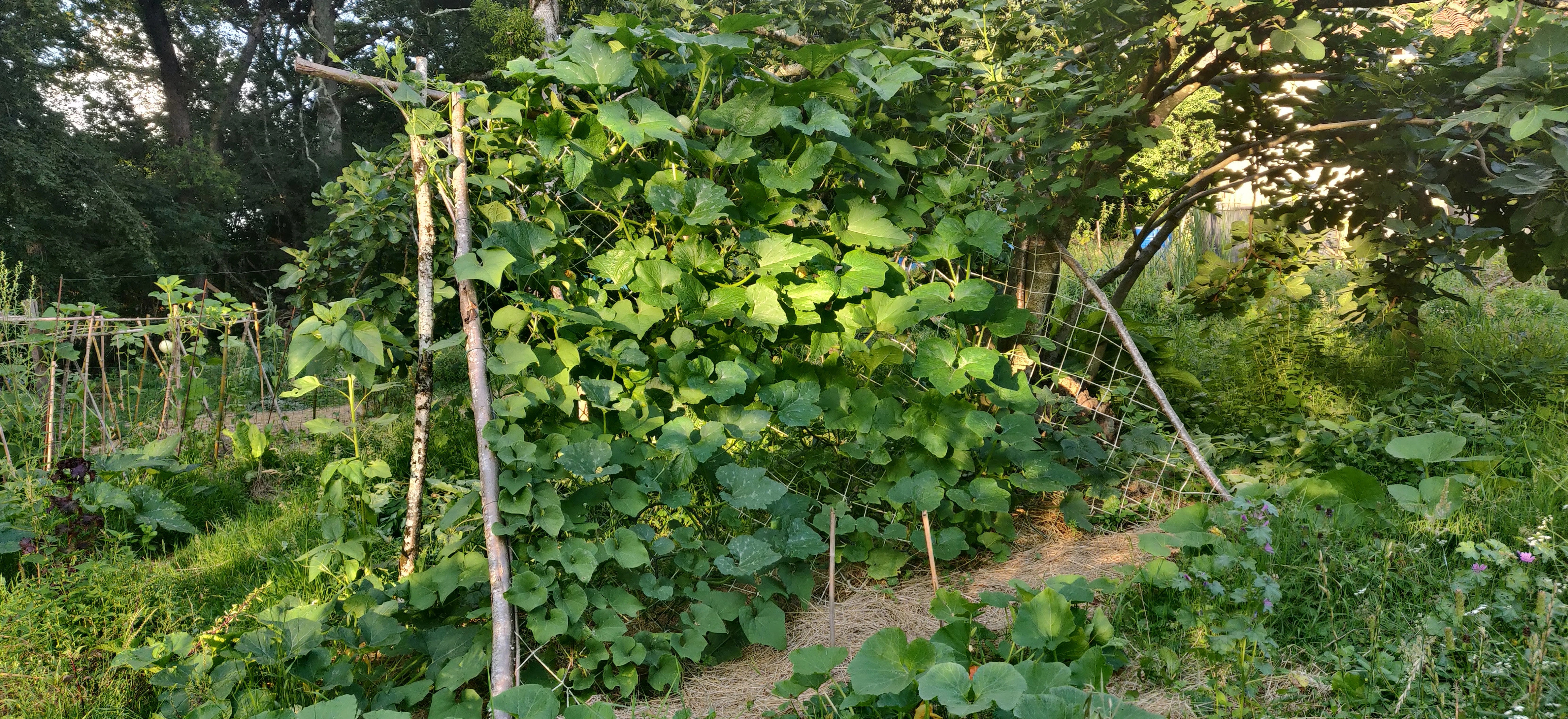
We use removable rebar structures for all our varieties of climbing or vine plants that need support. This choice became obvious after trying two other materials: wood and bamboo. Unfortunately, in both cases, the structures deteriorated very quickly due to the high humidity in the garden.
This type of support has many advantages, including allowing crops to grow at different heights while creating shaded areas for roots and heat-sensitive plants.
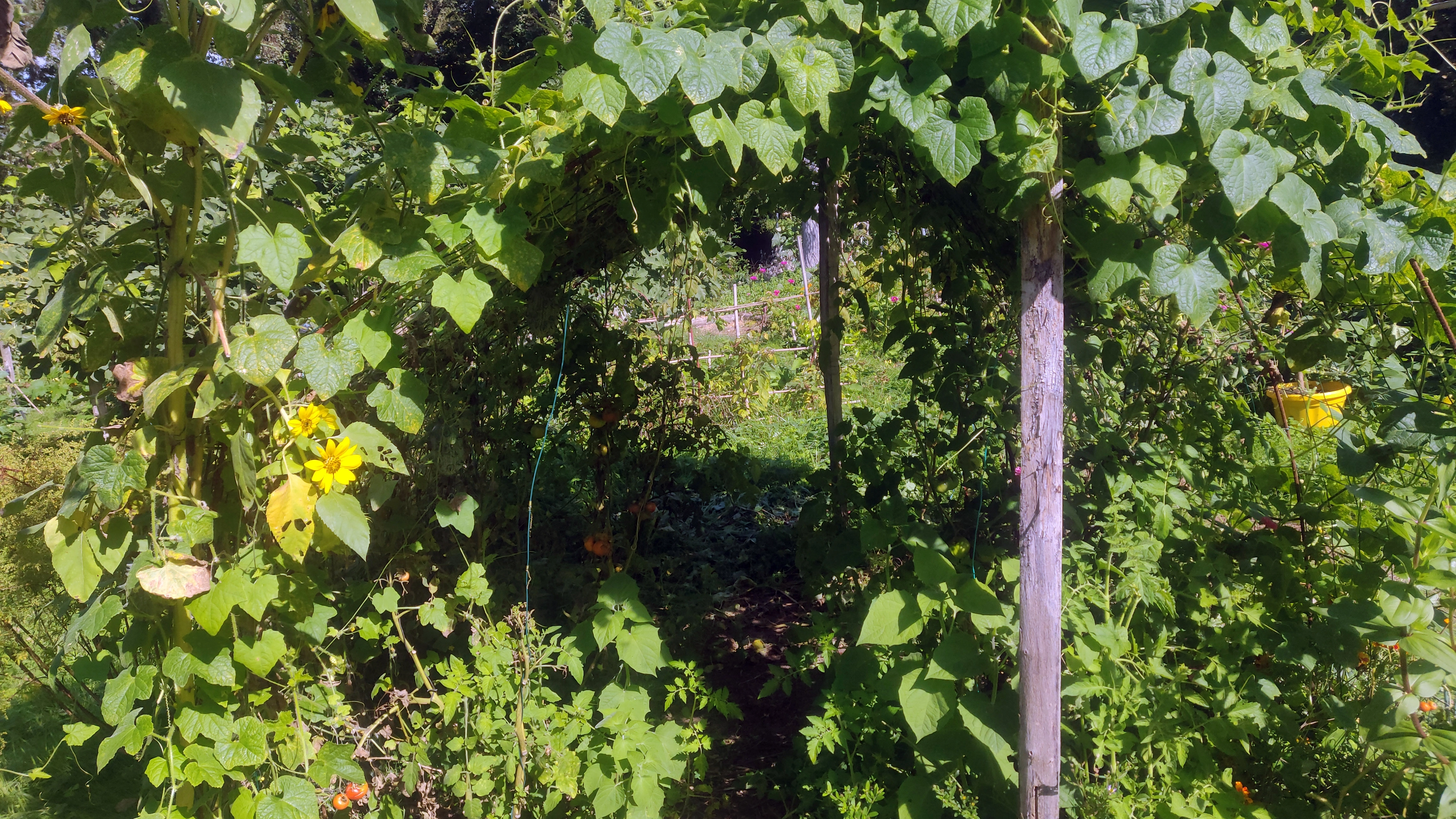
The young trees we planted in the garden can serve as additional supports in the near future.